A homeowner near the Square finds out their house sits inside a nationally recognized historic district and assumes that's the rule book. It isn't. The plaque that came with the 1985 National Register listing doesn't stop anyone from replacing a window, re-siding a porch, or tearing out a dormer. What actually stops that work, or slows it down for months, is a separate and much narrower piece of city zoning that most owners never hear about until a contractor mentions it or a permit gets bounced back for review.
If you own, or are thinking about listing, a pre-1945 home near downtown Gallatin, that distinction is worth understanding before you touch anything visible from the street.
Two Different Kinds of "Historic," and Only One of Them Regulates You
Gallatin has two separate historic designations layered over parts of the city, and they get confused constantly because they share the word "historic."
The first is the Gallatin Commercial Historic District, which covers the Public Square, the Sumner County Courthouse, and properties along Water, Main, College, and Franklin Streets. It was listed on the National Register of Historic Places in 1985. That listing is honorary and documentary. It recognizes architectural and historical significance, and it can matter for certain tax credit programs, but on its own it places no restrictions on what a private owner can do to their house.
The second designation is the one with teeth. In 1991, Gallatin's City Council approved local historic zoning and the city became a Certified Local Government, a status that involves periodic check-ins with the Tennessee Historical Commission. That local zoning created an H-1 Historic overlay that now covers three specific areas: the Commercial District downtown, the East Main Street corridor between East Eastland Street and Sherry Circle, designated in 1993, and the Woodson Terrace neighborhood, designated in 1996, made up mostly of single-family homes built between the late 1800s and the mid-1900s.
| Local Historic District | Designated | What It Covers |
|---|---|---|
| Gallatin Commercial Historic District | Local zoning added 1991 (National Register listing 1985) | Public Square, Sumner County Courthouse, Water, Main, College, and Franklin Streets |
| East Main Street Historic District | 1993 | East Main Street corridor, East Eastland Street to Sherry Circle |
| Woodson Terrace Historic District | 1996 | Primarily single-family homes built late 1800s to mid-1900s |
If your parcel sits inside one of these three boundaries, any exterior work has to go through Gallatin's Historic District Commission and get a Certificate of Appropriateness before Building Codes will issue a permit. A house can be inside the 1985 National Register boundary and still fall outside the enforceable H-1 zoning, and the reverse confusion happens too. The only way to know for certain is to check the parcel against the city's zoning map, not against how old or how charming the house looks.
What a Certificate of Appropriateness Actually Controls
The design guidelines go well past windows and siding, which is where most sellers assume the review stops.
Deteriorated architectural features are supposed to be repaired rather than replaced whenever that's possible. When replacement is unavoidable, the new material has to match the original in composition, design, color, and texture, and replacing an irreparable feature with anything short of an exact reproduction requires its own review. That standard applies to brackets, fascias, cornices, and chimneys as much as it applies to a front door.
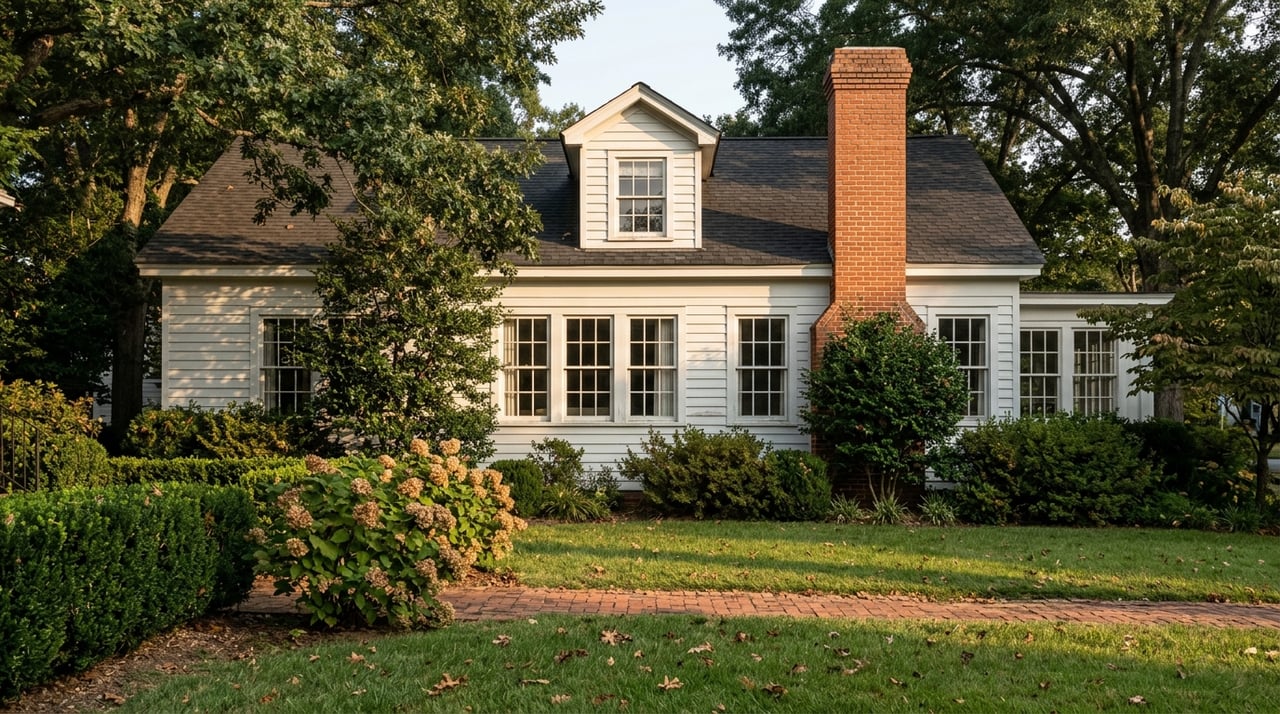
Windows have their own layer of detail. The original number and arrangement of panes has to be maintained, original window openings can't be filled in, and storm windows are generally considered inappropriate unless they're styled and colored to match the original sash. Roofs carry similar rules: original pitch, configuration, and material should be retained, and dormers can't be introduced where none existed, which matters a great deal if you're planning to add one for extra square footage before listing.
Then there are the details that catch people completely off guard. Mailboxes of a novelty design aren't permitted, and in the East Main Street district they can't sit in or close to the public right-of-way. Major pruning of front and side yard trees facing a public street requires its own Certificate of Appropriateness, with an exception only for emergency work after storm damage. None of that reads like "historic preservation" to most homeowners. It reads like a very specific, very local set of rules that only becomes visible once you're already mid-project.
A Dormer on Hume Avenue Shows How This Plays Out
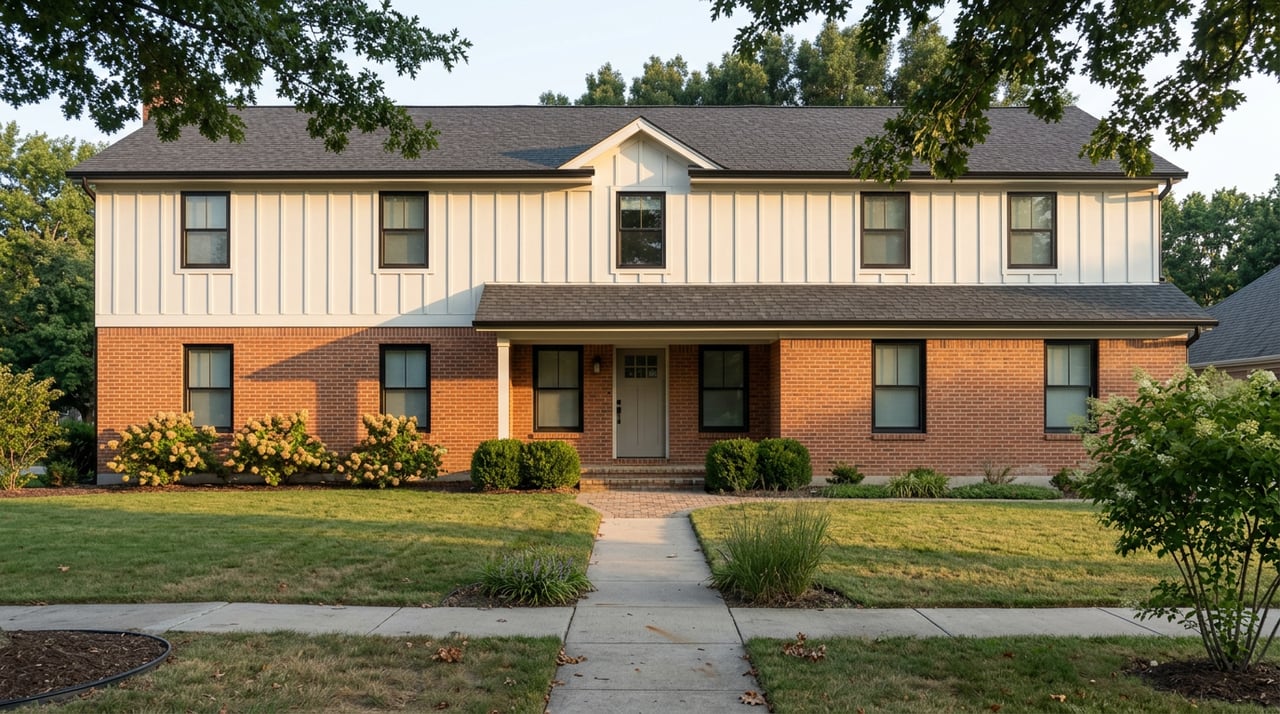
Public meeting records give a clear look at what this process looks like in an actual case. A Historic District Commission agenda dated July 10, 2025 lists a Certificate of Appropriateness application for front and rear dormer additions on a home on North Hume Avenue in Woodson Terrace. County assessor records describe that house as sided in white vinyl with a shingle roof and a brick chimney, which is worth pausing on. The siding itself isn't an original historic material, and the commission's review didn't require the owner to rip it out and replace it with wood. What it did require, under the same meeting's guidelines, was that the new dormer work avoid destroying whatever historic material remained on the structure and read clearly as new construction rather than a seamless copy of the old roofline.
That's the mechanism sellers tend to miss. The rules don't reach backward and force you to undo a previous owner's vinyl siding or replacement windows. They do reach forward, and they apply in full to anything you propose next, even on a house that's already a patchwork of original and non-original materials. A seller who assumes "well, the house already isn't original, so the rules probably don't apply to me" is working from the wrong assumption.
The Enforcement Is Smaller Than You'd Think, and Also Bigger
The penalty written into Gallatin's historic district ordinance looks almost like a formality on paper. A violation carries a fine of not less than two dollars and not exceeding fifty dollars, or imprisonment of up to ninety days, or both. Read quickly, that sounds like something nobody would ever actually enforce.
The detail that changes the math is the next line: every day a violation continues can be treated as a separate offense. A fifty dollar fine that resets daily on a stalled, unauthorized project adds up fast, and more importantly, unpermitted exterior work discovered during a listing or an inspection can stall a closing while it gets resolved with the Commission after the fact. It's a much cleaner process to get the Certificate of Appropriateness before the work starts than to explain unauthorized changes to a buyer's attorney during due diligence.
Build the Meeting Cycle Into Your Timeline
The Historic District Commission doesn't operate on the same rhythm as a typical building permit review. Public agendas show real gaps between sessions. The commission's July 10, 2025 meeting was approving minutes from a session held back on May 8, 2025, roughly two months earlier. If your renovation depends on a Certificate of Appropriateness, that review has to clear before Building Codes will issue the permit, and the Commission's own schedule, not your contractor's availability, sets the pace.
Anyone planning pre-listing work inside one of Gallatin's three historic districts should start that conversation with the Planning Department months before they want the house on the market, not weeks. As of August 2026, the city's planning page is also displaying draft zoning materials from April 2026 open for public comment, which is one more reason to confirm current rules with the city directly rather than relying on what a neighbor did a few years back.
A Pre-Listing Checklist for Historic District Sellers
- Confirm the parcel actually sits inside the H-1 overlay using the city's official zoning map, rather than assuming based on the age or style of the house.
- Before signing a contractor or ordering materials, call the Gallatin Planning Department at 615-451-5796 or visit Room 201 at City Hall (132 W. Main Street) to ask directly whether your planned project needs a Certificate of Appropriateness.
- Pull the East Main Street or Woodson Terrace design guideline packet for your specific district before you finalize material choices, since the standards differ in detail by district.
- Build a realistic timeline around the Commission's meeting schedule, not your project's ideal start date.
- Keep any past Certificates of Appropriateness or Commission correspondence on file. That paperwork answers a buyer's questions during due diligence far faster than a phone call to City Hall.
- Don't assume a National Register plaque either protects you from review or exempts you from it. Check the zoning overlay specifically.
Frequently Asked Questions
Does every old-looking house in Gallatin fall under these rules? No. Only parcels inside the three mapped local historic districts, the Commercial Historic District, East Main Street, and Woodson Terrace, carry the H-1 overlay and its Certificate of Appropriateness requirement. A charming older home outside those boundaries isn't subject to this review.
If my house is on the National Register, does that alone restrict what I can do to it? No. The 1985 National Register listing for the Commercial Historic District is a recognition of historical significance. The enforceable restrictions come from the separate local historic zoning the city adopted in 1991, which created the H-1 overlay.
My home already has non-original siding or windows. Am I required to replace them to match the original? The design guidelines don't force retroactive correction of materials that predate current rules. They do apply in full to any new work you propose going forward, which is exactly what played out with the dormer addition reviewed on North Hume Avenue.
If you're weighing a sale near the Square, in Woodson Terrace, or along East Main Street, and you want a clear-eyed read on how any of this affects your specific house and timeline, Local Realty Partners can walk through it with you before you call a contractor. Start with a free home valuation, and let's talk through what your house is actually worth to list, and what it'll take to get there.