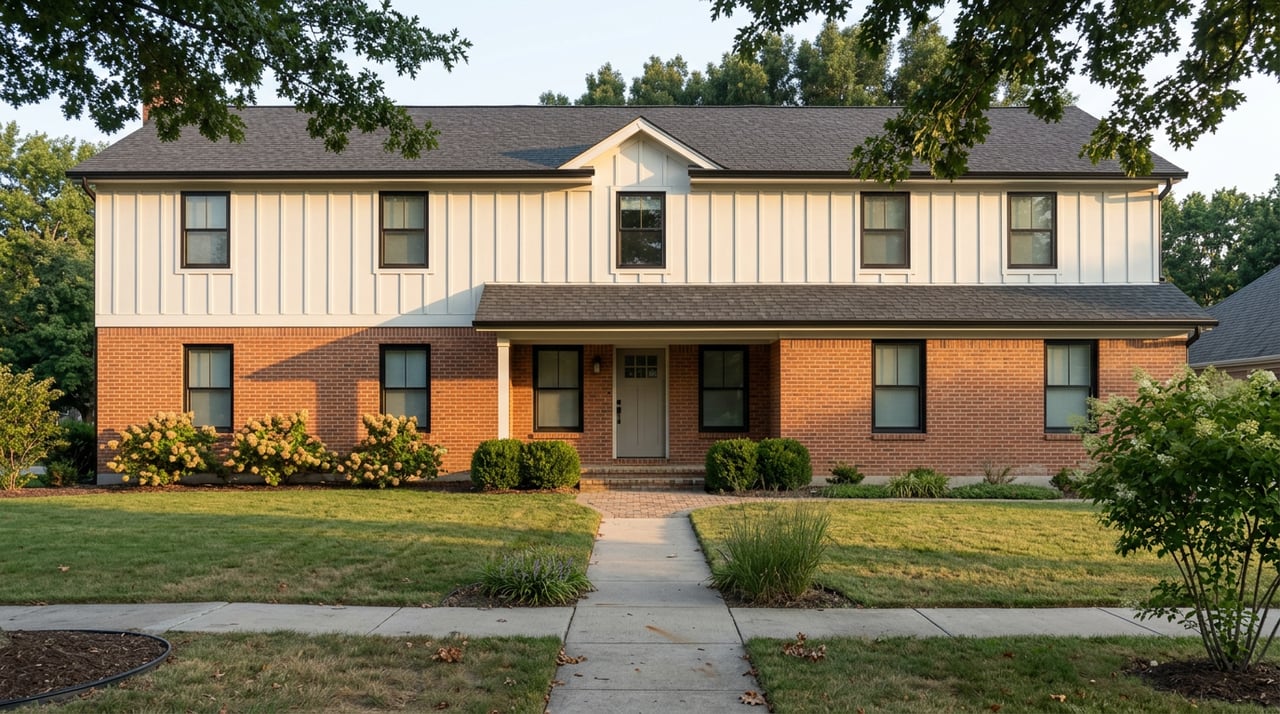
For most of the last four years, a Portland seller could hand a buyer an inspection report with a few open items and expect a shrug. Inventory was thin, showings were fast, and buyers were mostly grateful to be under contract. That market is gone. In March 2026, homes in the 37148 zip code sold at a median of about $315,000, down roughly 9.7% year over year, and the average time on market stretched to 76 days from 91. Movoto tracked April 2026 at a $342,450 median with 49 days on market. Active listing counts sit somewhere between 143 and 199 depending on the source and week, with average list prices pulled toward $446,000 by acreage and luxury inventory that a typical buyer will never touch.
The gap between what's listed and what's closing is the story. It means the second offer is slower to arrive than it used to be, and it means inspection findings that once got waived are now the line item a buyer uses to ask for $6,000 off. Two of those findings are specific to how homes get built and permitted in northern Sumner County, and both of them reward sellers who start early.
The septic letter runs on its own clock
If your Portland home is outside city sewer, the single most under-planned item in the transaction is the septic inspection letter from the Tennessee Department of Environment and Conservation, Division of Water Resources. It is not a home inspector's job. It is a state process, and it typically requires several weeks of lead time to schedule. Contracts written on a 30-day close have collapsed over this exact detail.
A few things about how Tennessee treats septic that surprise sellers:
- Systems are permitted by bedroom count, not bathroom count, because bedrooms proxy for how many people generate waste through sinks, laundry, and showers.
- The original permit includes a drawing showing the tank, the field lines, and a duplicate area reserved in case the primary system ever fails. If you have covered that duplicate area with a shed, a pool, or a driveway, a buyer's agent will notice.
- A licensed inspector will typically pump the tank so the sides and bottom are visible for cracks, then check inlet and outlet pipes and confirm the drain field is accepting water. A dye test on the field lines is optional and worth asking for.
- Tanks generally need pumping every three to five years. If your last invoice is from 2019, get one now, before a buyer asks.
Sellers on well water should pull the well log if they have it and plan for a bacteriological and, if the buyer's lender requires it, a nitrate test. USDA and VA loans in particular can trigger requirements that a cash buyer would not.
Radon is not somebody else's problem
Sumner County sits in EPA Radon Zone 1, the highest of the three classifications, alongside Robertson, Davidson, Williamson, and most of the counties ringing Nashville. The zone map was built in 1993 and the EPA is explicit that no home should skip testing based on the map, but the geology behind the classification is real. Limestone bedrock and the underground water channels that cut through it give radon an easy path into crawl spaces and slabs. User-submitted testing data compiled by Air Chek puts the Sumner County indoor average at roughly 3.4 pCi/L, close enough to the EPA action level of 4.0 that individual homes routinely test above it.
Two practical implications for a Portland seller:
A buyer's inspector will almost certainly offer a radon test as a package add-on. Local firms including Qualitas Home Inspections in Gallatin, run by Tennessee Licensed Home Inspector John Steele, and That One Inspector serving the White House and Sumner-Robertson corridor both quote radon testing alongside sewer scope, termite, and mold. The typical Sumner County inspection runs $350 to $600 depending on square footage and add-ons.
Mitigation, if needed, is not catastrophic. A sub-slab depressurization system installed by a certified contractor typically runs $800 to $2,500 and can be done in a day. That is a real number to know before a buyer asks for $10,000 in concessions on a system that costs a fraction of that to install. If your home has never been tested, a short-term test kit is cheap and takes 48 hours. You would rather know now.
Two housing stocks, two inspection reports
Portland's inventory is not one thing. A 1955 bungalow four blocks off Main Street and a 2024 D.R. Horton build on Canyon Drive will produce completely different reports from the same inspector. Sellers who understand which column they are in can front-run the findings.
| Home type | What inspectors flag most | Where sellers lose money |
|---|---|---|
| Pre-1980 in-town homes | Aging galvanized or polybutylene plumbing, knob-and-tube remnants, undersized panels, foundation settlement, crawl-space moisture | Panel and plumbing credits negotiated late in the deal |
| 1980s–2000s subdivisions | HVAC nearing end of life, roof shingles at year 18+, original water heaters, poor grading toward foundation | Buyer's insurance quotes flagging a 20-year-old roof |
| New construction and recent builds | Installation shortcuts, drainage issues on freshly graded lots, missing kick-out flashing, incomplete attic insulation | Builder punch-list items surfacing after warranty expires |
| Acreage parcels on Highway 52, Fowler Ford, Butler Bridge | Septic condition and duplicate-area encroachment, well output and bacteria, outbuilding wiring, private-road maintenance access | Financing falling through on septic or well findings |
The Sumner County inspector community talks openly about this split. Gallatin's Qualitas describes historic homes near the square as prone to dated wiring and foundation settlement while new subdivisions bring drainage problems on freshly built lots. The same pattern holds five miles up Highway 109 in Portland.
Why the pricing math has changed
Sellers hear conflicting numbers about their own market, and it is worth pausing on why. The Zillow Home Value Index for 37148 reported $331,412 as of March 31, 2026, up 0.4% year over year. Redfin, over roughly the same window, reported median sale price down 9.7%. Movoto reported April volume of 242 homes sold, up from 157 the prior April. All three can be true at once.
The reconciliation is composition. Portland's active list is bar-belled between sub-$200,000 in-town small-square-footage homes and $600,000-to-$1.5-million acreage and custom builds. Average list price of about $446,000 tells you almost nothing about what a 1,900-square-foot ranch will actually close at. What sellers should pay attention to is the direction of days on market and the direction of price cuts on comparable homes. Both are lengthening. Zillow's own tracking put the 37148 typical pending timeline at 28 days as of March, but Redfin's 76-day figure suggests a wide dispersion between well-prepared homes that move quickly and everything else that lingers.
That dispersion is the seller's lever. A pre-inspected home with a recent septic letter, a radon test on file, and receipts for HVAC service and a roof underlayment check moves into the fast lane. A home with none of that becomes a comp for the next price reduction on the street.
A pre-list punch list that pays for itself
If you are planning to list in the next 90 days, work backward from these items rather than waiting for a buyer's inspector to find them:
- Pump the septic tank and hold the receipt. Confirm the duplicate area is clear and pull a copy of the original permit from Sumner County if you can locate it.
- Order a short-term radon test now. If it reads above 4.0 pCi/L, get two quotes on mitigation before you list.
- Have your HVAC serviced and keep the tag on the unit. Buyers photograph these.
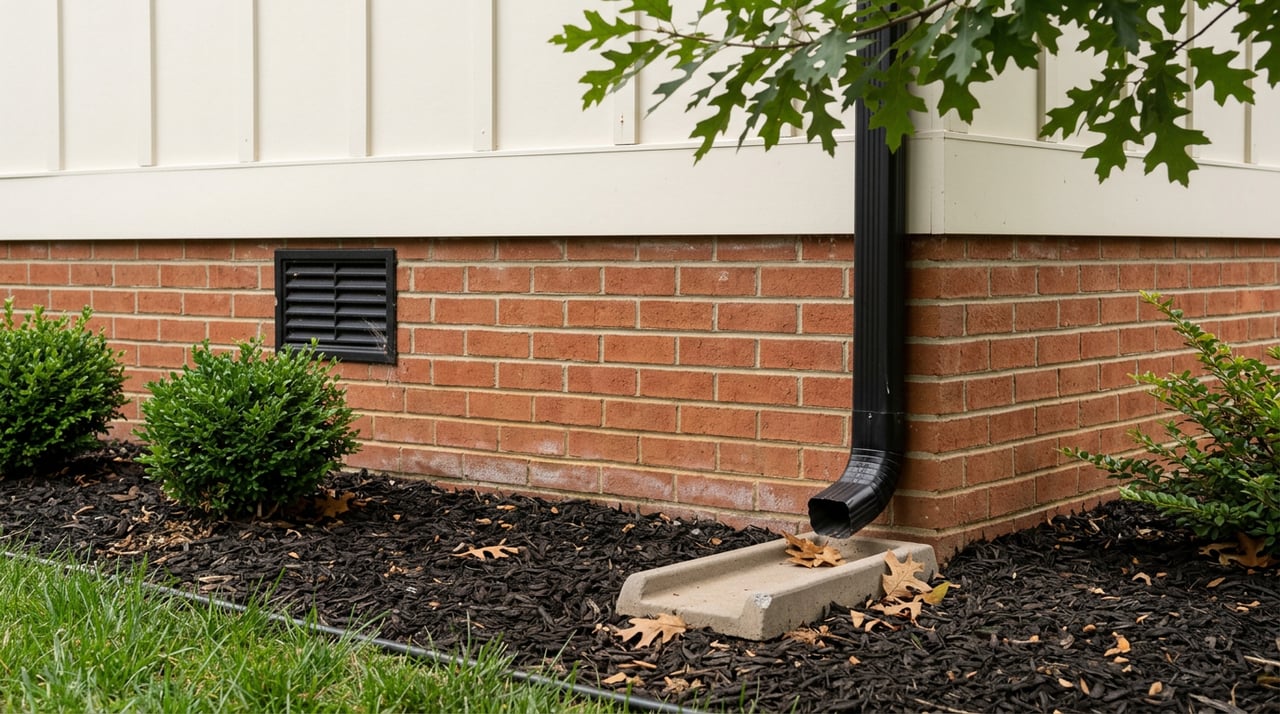
- Walk your grading after a hard rain. Any water pooling within six feet of the foundation will show up on an inspector's moisture meter in a crawl space.
- If your home was built before 1980, budget for an electrician to open the panel and confirm what is inside. Federal Pacific and Zinsco panels come up regularly in this vintage.
- On acreage, locate your well head, confirm the cap is sealed, and know the depth and gallons per minute if you have the log.
Most of this is under $1,500 out of pocket. The alternative is discovering it in a repair-request addendum written by someone whose incentive is to reduce your net proceeds.
FAQ
Do Tennessee sellers have to disclose known septic problems? Yes. Tennessee's residential property disclosure law requires known material defects in systems including septic and well to be disclosed on the standard form. Not knowing is different from not disclosing, which is why documented recent service records help you.
Can I sell "as-is" and skip the inspection issue entirely? You can list as-is, but the buyer's inspector still shows up and the buyer's lender still has requirements. As-is limits your obligation to repair; it does not eliminate the buyer's ability to walk during the inspection period, and it usually invites a lower opening offer.
How early should I schedule the TDEC septic letter? As soon as you have a signed contract, and ideally you have already had the tank pumped and the system visually inspected by a licensed provider before you list. The state process is the slow link in the chain, and a 30-day close cannot absorb a three-week scheduling gap.
Is radon mitigation something a buyer will accept as a credit instead of a completed job? Sometimes, but a completed and post-tested system is worth more at the closing table than a credit. It removes the buyer's uncertainty and it eliminates a future re-negotiation lever.
If you are thinking about listing in Portland or anywhere in northern Sumner County this fall, the earliest conversation is the most valuable one. Local Realty Partners will walk your home the way an inspector would, flag the items worth handling now, and give you a straight read on what comparable homes are actually closing at, not just what they are listed at. Start with a free home valuation and a no-pressure conversation about your timeline.