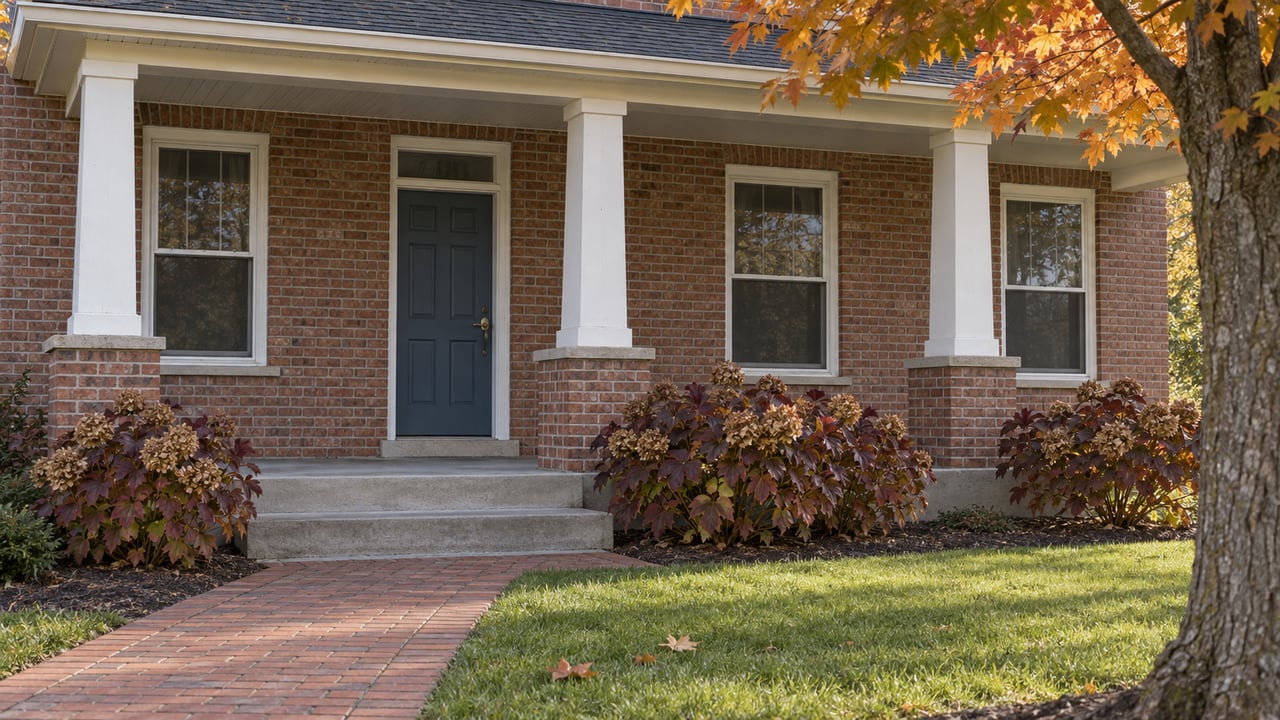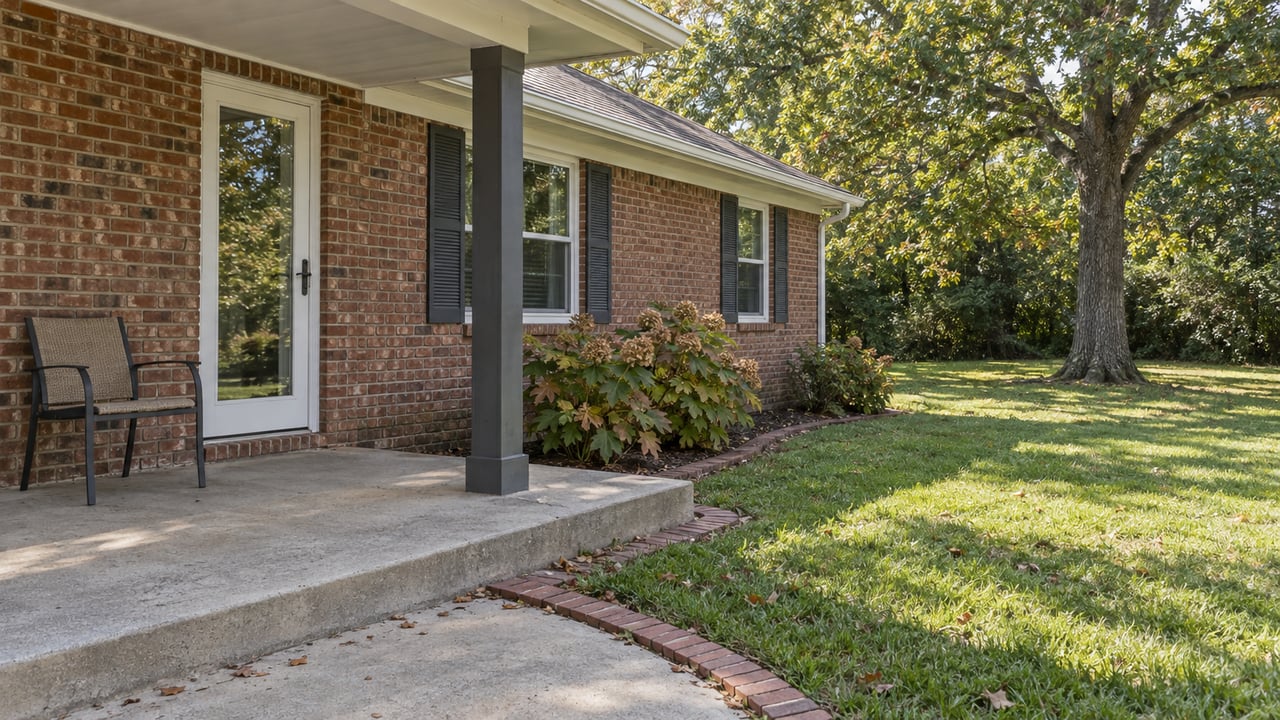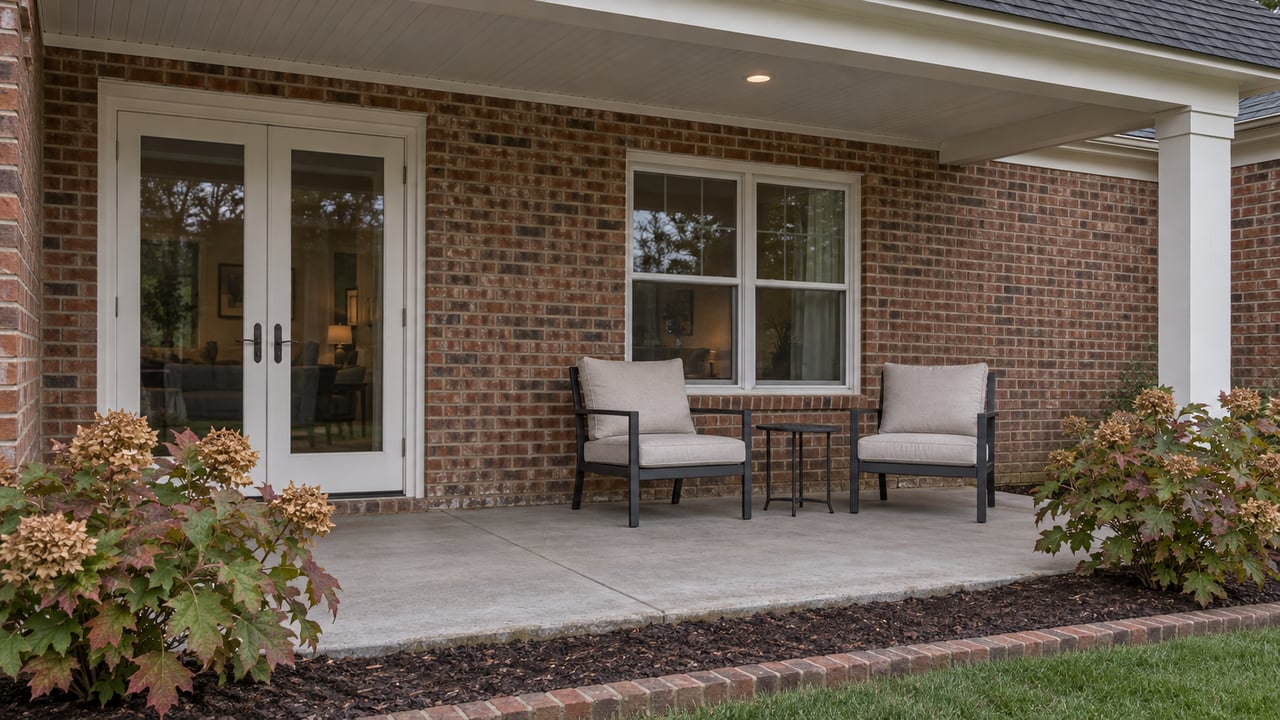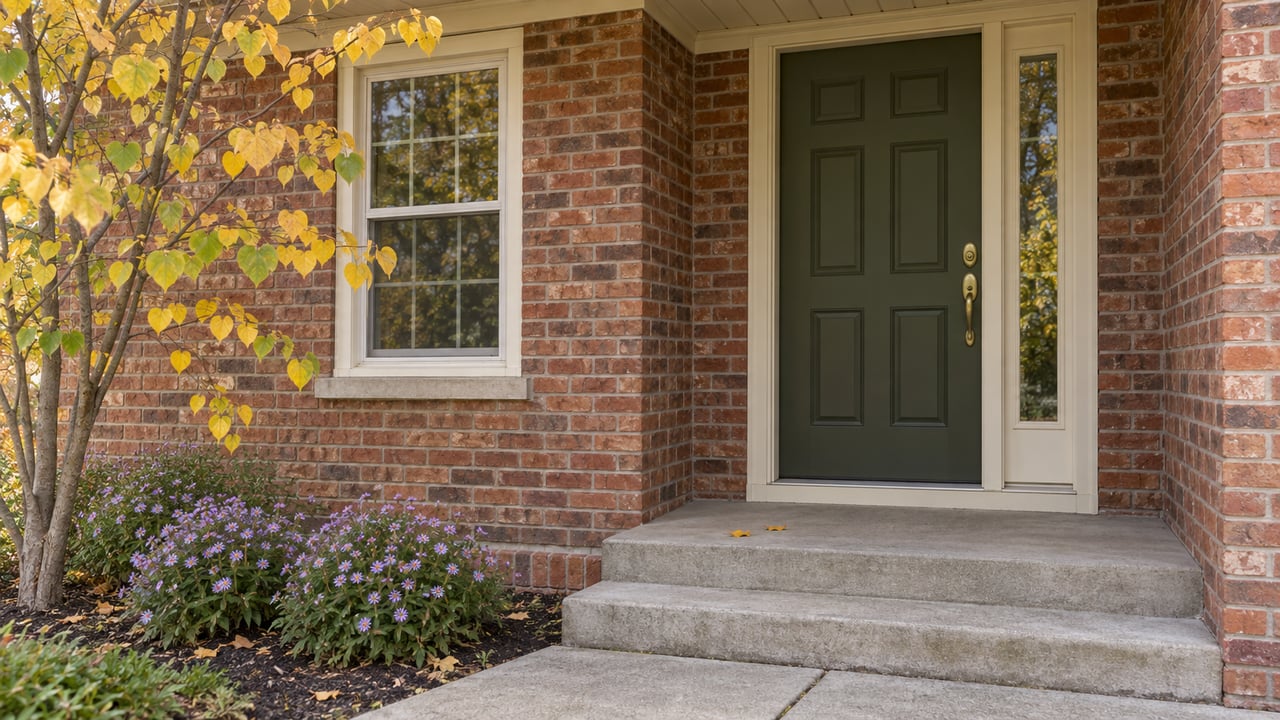
Search "Portland TN home price" this week and you will get answers that do not agree with each other. One source puts the average home value in the 37148 zip code at $331,412, up just 0.4% over the past year, current as of March 31, 2026. Another shows the median sale price at $315,000 for March 2026, down 9.74% from the same month the year before, with homes taking 76 days to sell compared to 91 days the prior year. A third, drawing on the trailing twelve months of recorded sales in the zip code, lists a median list price of $335,572. A fourth, pulling straight from the region's MLS feed, shows active listings averaging $446,424 with a price of $233 per square foot as of late July 2026.
Four numbers, four different pictures of the same zip code, and none of them are wrong. They are just measuring different slices of a market that is not actually one market.
If you are comparing Portland to Gallatin, White House, or Hendersonville and using a single median as your yardstick, you are working with a number that quietly blends three distinct kinds of homes into one average. Understanding why that blend produces such a wide spread tells you something more useful than the median itself: which slice of Portland a given listing actually belongs to, and why that matters more than the city-wide number ever will.
What Each Number Is Actually Counting
An index like the one showing $331,412 is not tracking individual sales at all. It is a smoothed estimate of value across every home in the zip code, whether or not that home has sold recently, which is why it moves slowly and shows something close to flat.
A closed-sale median, the one landing at $315,000 for March, only counts homes that actually changed hands that month. A slow month with a handful of lower-priced sales can pull that number down hard even if nothing about the broader market has shifted.
A list-price median across the trailing twelve months, the $335,572 figure, mixes homes still sitting on the market with homes that already sold, so it reflects what sellers are asking rather than what buyers are paying.
And an average built only from active listings, the $446,424 figure with the $233 per square foot number, is skewed upward by whatever is currently for sale, which in Portland right now includes a meaningful share of new construction on larger lots. New construction almost always lists higher than resale, so a market with more new inventory active at once will show a higher average even if resale prices have not moved.
None of these numbers is lying. They are each telling the truth about a different slice of the same zip code.
Three Markets Wearing One Zip Code
Once you know what each number is counting, the spread makes sense, because Portland's housing stock is not one continuous market. It is closer to three markets sitting inside the same city limits.
- In-town legacy resale. Older homes closer to downtown and North Broadway, typically on smaller in-town lots, often the least expensive per square foot because the land underneath them is not the selling point.
- Platted subdivisions with city water and sewer. Newer communities like Parkside Estates, where recent listings have run $358,990 for a 3-bedroom, 2.5-bath Coleman floorplan and $386,990 for a 4-bedroom Andover floorplan, and Angelina Estates nearby. Both are built inside city utility lines and sit in the middle of the price range, usually carrying the tightest builder-to-builder comparisons.
- Acreage and no-HOA new construction on the rural edge. A new-construction home in Waverly Pointe Sub, 3 bedrooms and 2.5 baths on just under 1.5 acres, recently went under contract at $744,000. Wind Wood Estates, another subdivision on the edge of town, is being marketed with city water, city sewer, and gas available but no HOA. These properties carry a land premium that shows up as a higher price per square foot even when the house itself is modestly sized, and it is a meaningful part of why the RealTracs active-listing average runs so far above the closed-sale median.
Across the wider new-construction market in Portland, one home-building marketplace currently lists 103 communities from 30 builders, with prices ranging from $199,000 to $1,019,900 and homes between 931 and 4,490 square feet. That is not a market with one center of gravity. It is a market with several, and the median you see depends entirely on which of those centers your data source happened to sample.
The Bypass Is About to Redraw Which Ring Is "Close In"
Here is the part that makes this more than a methodology footnote. The Tennessee Department of Transportation is currently building the Portland Bypass, a 7.2-mile, four-lane extension of State Route 109 that will run west of downtown Portland, connecting existing SR 109 south of SR 76 northward to existing SR 109 on North Broadway.
The project's planned access points matter more than the mileage. Phase 1 includes connections at Vanatta Drive and T.G.T. Road. Phase 2 adds access where the bypass crosses SR 76, Jackson Road, and Collins Road. Kirby Drive will be extended westward to connect to the bypass, a route built specifically to serve the industrial and warehousing facilities in that vicinity along with residents in the northern part of Portland. Woods Road will be shifted south to line up directly across from Sharon Drive, a change that also gives a proposed fire station direct bypass access. Along the way, SR 52 is being widened to five lanes from near West Market Street west to the new interchange, with sidewalks planned between West Market Street and Searcy Lane.
TDOT has also built the Middle Tennessee Strawberry Festival directly into the construction rules: no lane closures on SR 109, SR 52, or College Street during the festival, and none during weekday peak hours from 5 to 8 a.m. or 2 to 7 p.m. It is a small detail, but it tells you the project is being planned around the town's actual calendar, not just its traffic counts.
What this means for the three-ring pattern above is straightforward. Right now, "close to town" in Portland mostly describes in-town legacy resale. Once the bypass and its access points at Vanatta Drive, Kirby Drive, and Woods Road/Sharon Drive are complete, some acreage and rural new-construction parcels near those interchanges will have a faster, more direct route to the highway network than homes that currently sit closer to downtown but off the main corridor. The map of what counts as convenient is mid-change, and that is a second reason a single city-wide median cannot capture what is actually happening here.
How to Use This If You're Comparing Numbers Right Now
If you are looking at Portland alongside other Middle Tennessee communities, a few questions will tell you more than any median:
- Ask what kind of number you're looking at. Is it an index, a closed-sale median, a list-price median, or an active-listing average? Each answers a different question.
- Ask which ring the listing sits in. In-town resale, a platted subdivision with city utilities, or acreage on the rural edge will each behave differently on price, taxes, and maintenance.
- Ask where it sits relative to the bypass corridor. A property near Vanatta Drive, Kirby Drive, or the Woods Road/Sharon Drive intersection will have a different commute profile once construction finishes than one that does not.
- Compare price per square foot within the same ring, not across rings. A $233 per square foot average across active listings tells you little if you are comparing a new-construction home on 1.5 acres to a smaller in-town resale.
A Few Questions Worth Asking Directly
Does the bypass mean prices near the new access points will rise? No one can promise that, and we would not tell you otherwise. What we can say is that the corridor's access geography is changing in specific, documented ways, and that is worth factoring into how you compare properties, regardless of what happens to price.
Why does the RealTracs active-listing average run so much higher than the closed-sale median? Because it only reflects what is currently for sale, and new construction on larger lots makes up a meaningful share of that inventory right now. Closed sales include the full mix of what actually sold, including lower-priced resale.
Is Portland a buyer's market or a seller's market at the moment? It depends on which ring you are asking about, which is exactly the point of this piece. That is a conversation worth having listing by listing, not zip code by zip code.
Numbers like these are a starting point, not a verdict. If you are trying to figure out which ring of Portland actually fits what you need, or what a specific address near the bypass corridor is really worth, that is a conversation, not a lookup. Local Realty Partners is happy to walk through it with you, no pressure, just a clear look at where your home or your search actually stands. Get a Free Home Valuation whenever you are ready to see where the real numbers land.