Buying land near Gallatin can feel simple at first. A parcel looks open, the location works, and you start picturing a future home or long-term investment. But with vacant land, the biggest questions are often the ones you cannot see from the road. If you want to avoid expensive surprises, it helps to know what to verify before you close. Let’s dive in.
Start With Jurisdiction and Zoning
One of the first things to confirm is who actually governs the parcel. Land near Gallatin may fall inside Gallatin city limits, within the city’s planning region, or in unincorporated Sumner County. That matters because each area can involve different planning review, zoning rules, and permit steps.
Gallatin’s Planning Department handles development inside the city and its planning region. Sumner County Planning & Zoning handles rezoning, subdivisions, site plans, and new construction in unincorporated county areas. Before you assume what can be built, check the parcel against the current local map and adopted rules.
This step matters even more right now because Gallatin has been updating its zoning ordinance. As of May 2026, the city said the draft was under Planning Department review before later action by the Planning Commission and City Council. In plain terms, you want to rely on the current adopted ordinance and map, not an old handout or an unfinished draft.
Gallatin’s planning and codes map can be especially helpful because it shows zoning along with flood zones, utility service areas, council districts, and the historic district. Sumner County also has a public GIS and property search system that can help you verify where a parcel sits before moving forward.
Treat Access as a Buildability Question
A lot can be attractive and still be hard to build on if access is not clear. This is one of the most important parts of land due diligence near Gallatin, especially if the parcel is tucked off the road, shaped oddly, or part of a larger tract that may be divided.
Gallatin Access Rules
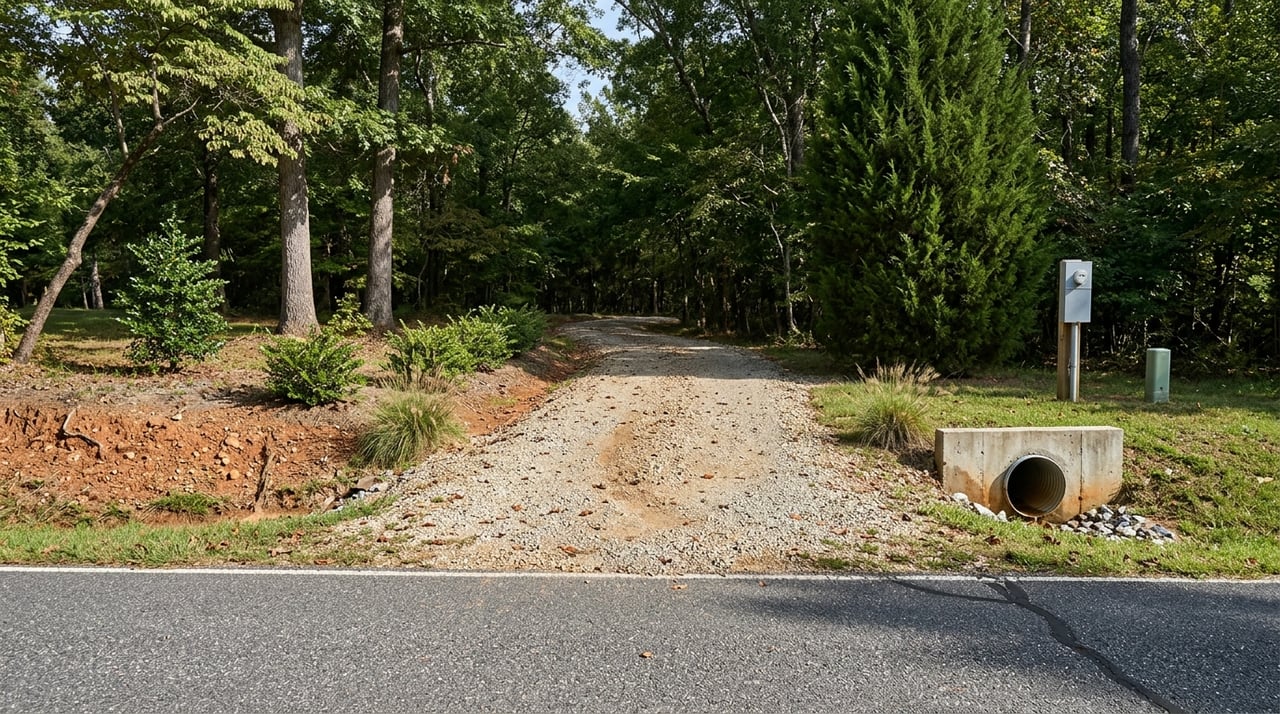
For parcels in Gallatin, driveway access is regulated. The city says a single-family home is generally limited to one access point into the public right-of-way unless the City Engineer approves another location. If there is a drainage ditch, a culvert is required.
Gallatin’s subdivision regulations also address access for new lots and new road right-of-way. The sketch plan review process is where the city often flags road and traffic concerns early, before you spend more on engineering or surveying.
Sumner County Access Rules
For land in unincorporated Sumner County, access is tied directly to whether a building permit can be issued. County regulations say a permit cannot be issued unless the lot has proper access through a public street, an approved or recorded subdivision plat with adequate guarantees, or a compliant permanent easement.
Flag lots need special attention. Sumner County says flag lots must have at least 50 feet of physical road frontage, and an easement cannot be used to meet that frontage requirement. The county also notes that flag lots can complicate emergency access and public service delivery.
If a tract fronts an arterial or collector road, the county may also require shared or alternative access so vehicles do not need to back onto that road. That can affect your layout, driveway location, and even whether the lot works the way you expected.
Know Which Road Authority Applies
Driveway approval may depend on what kind of road the parcel touches. In Sumner County, the county’s new construction checklist says properties on county roads should get a Drive Connection Permit from the County Highway Department. If the property fronts a state highway, driveway permits go through TDOT.
For Gallatin city parcels, local driveway permit rules apply within the city process. This is a good example of why road frontage alone is not enough. You also need to know what type of road it is and which office controls the access.
Verify Utilities Early
Many buyers assume utilities will be easy if a parcel is near other homes. Sometimes that is true. Sometimes it is not. Near Gallatin, utility availability can vary by service area, and the cost can differ depending on whether the property is inside or outside city limits.
Water, Sewer, and Natural Gas
Gallatin Public Utilities provides water, sanitary sewer, and natural gas service in parts of the area. The utility posts different charges inside and outside the city limits. For example, the posted water and sewer meter charge is $11.92 per month inside the city and $17.88 per month outside the city, while the all-usage charge is $3.25 per 100 cubic feet inside and $4.88 outside.
GPU also posts tap, inspection, and system development charges. Its posted single-family sanitary sewer tap fee is $750 inside city limits and $1,500 outside city limits, before any added development or inspection charges. Those numbers show why utility planning is not just about availability. It is also about budget.
Utility service should be checked parcel by parcel. Gallatin’s planning and codes map includes utility service areas, and White House Utility District notes that its service area includes Gallatin and nearby communities. Its wastewater presence also extends into the southern part of Gallatin. That means proximity alone does not confirm service.
Septic Is Its Own Due Diligence Step
Even if public utilities are nearby, septic may still be part of your decision. The Tennessee Department of Environment and Conservation requires a Subsurface Sewage Disposal System permit for septic installation or repair. The state says that permit should be obtained before dirt work or construction begins, including the building pad.
If the lot needs an alternative septic system, TDEC requires an extra-high intensity soils map prepared by a Tennessee-licensed soils consultant. That adds another step, and often another cost, to the process.
If you plan to divide a tract into two or more lots for immediate or future construction where septic will be used, TDEC requires a subdivision evaluation. There is an important exception noted by the state: for this septic-program rule, division does not count as a subdivision when all resulting tracts are 5 acres or larger.
Watch for Floodplain and Drainage Issues
Floodplain and drainage concerns can affect cost, design, permitting, and timeline. This is not always obvious from an online listing or a quick drive by the property.
Gallatin planning staff helps determine flood zone boundaries and administers floodplain regulations. In unincorporated areas, Sumner County’s engineering and floodplain section reviews development in FEMA flood zones, coordinates floodplain development permits, and focuses on stormwater quality and quantity management.
If any part of the parcel appears to be in or near a flood zone, it is smart to verify that early. A lot may still be usable, but the build area, grading plan, drainage work, or permit path can change.
Understand the Likely Permit Timeline
Land buyers often focus on purchase price and skip the timeline question. In reality, permit steps can shape how quickly you can build and how much pre-construction work is needed.
For Gallatin projects, sketch plan review generally takes about 30 days. The Planning Commission and Board of Zoning Appeals run on a six-week review cycle for submittals. The city also offers project meetings before formal application, which can help identify issues earlier.
In Sumner County, the new construction checklist shows a common sequence for larger new builds. That process may include:
- Getting an E911 address if a new driveway is being added
- Obtaining the driveway permit for a county road
- Submitting the zoning compliance form with the deed, plat, site plan, septic soils area, easements, and floor plan
- Securing the land disturbance permit
- Applying for the building permit
None of this means a property is a bad buy. It simply means you want a realistic picture of what happens after closing.
Bring the Right Team Into the Process
When you buy land, the right professionals can help you catch issues early. Near Gallatin, the most useful specialists often include a surveyor, a Tennessee-licensed soils consultant, and, when the access, drainage, or lot shape is more complex, an engineer.
That lines up with the local process. City and county reviews rely on plats and site plans, TDEC may require soils mapping, and Sumner County rules can require engineer-designed culverts or bridges for access in some situations.
The planning office is also part of your team. Gallatin offers pre-application and project meetings, and Sumner County Planning & Zoning handles zoning review, subdivisions, rezoning, and site plan review in unincorporated areas. Getting those answers before closing can save time, money, and stress.
A Simple Land-Buying Checklist
Before you buy land near Gallatin, try to confirm these items first:
- Which jurisdiction controls the parcel
- Current zoning and any applicable development rules
- Legal access and road frontage
- Which road authority handles the driveway permit
- Water, sewer, natural gas, or other utility availability
- Whether septic is needed and whether soils work has been done
- Whether floodplain or drainage rules affect the build area
- The likely permit sequence and review timeline
When those items are clear, you can make a much more confident decision.
Buying land should feel exciting, not uncertain. If you want steady, local guidance as you evaluate acreage or homesites near Gallatin, Local Realty Partners, LLC is here to help you ask the right questions before you commit.
FAQs
What should you check before buying land near Gallatin?
- You should confirm the parcel’s jurisdiction, zoning, legal access, utility service, septic or soils needs, floodplain status, and likely permit steps before closing.
Does land near Gallatin fall under city or county rules?
- It depends on whether the parcel is inside Gallatin city limits, in the city’s planning region, or in unincorporated Sumner County, and each can involve different review and permit requirements.
Why does access matter when buying land in Sumner County?
- Access matters because county rules say a building permit cannot be issued unless the lot has proper access through a public street, an approved or recorded subdivision plat, or a compliant permanent easement.
Can a flag lot work for building near Gallatin?
- It may, but in unincorporated Sumner County a flag lot must have at least 50 feet of physical road frontage, and an easement cannot be used to satisfy that frontage requirement.
How do you know if a Gallatin-area parcel has utility service?
- You should verify utility service parcel by parcel using local utility service area information because nearby homes do not automatically mean water, sewer, or gas is available at the lot.
When do septic permits matter for land near Gallatin?
- Septic permits matter before dirt work or construction begins, and if the lot needs an alternative septic system or subdivision evaluation, that can add time and cost to the process.
Do flood zones affect land buying near Gallatin?
- Yes, floodplain location can affect buildable area, drainage requirements, permit steps, and overall project timing, so it should be checked early.
What professionals help most when buying land near Gallatin?
- A surveyor, Tennessee-licensed soils consultant, engineer when needed, and the local planning office are often the most useful resources for evaluating buildability and next steps.