Dreaming about a home with room to spread out is exciting, but buying acreage around Portland involves more than finding a pretty house on a big lot. You need to know how the land can be used, who governs it, and whether access, utilities, and outbuildings are documented the right way. If you want a property that fits your lifestyle now and still makes sense for financing and resale later, a little extra due diligence goes a long way. Let’s dive in.
Why acreage buying is different
When you buy a lifestyle property, you are not just evaluating bedrooms and finishes. You are also buying road access, utility setup, land use rules, and the legal status of improvements like barns, workshops, and sheds.
Around Portland, those details matter because the rules can change based on location. Property inside Portland city limits falls under the city’s zoning and building framework, while unincorporated parcels are generally governed by Sumner County planning, zoning, and building codes, as outlined on the City of Portland zoning page.
Start with the property jurisdiction
One of the first questions to answer is simple: is the parcel inside Portland city limits or in unincorporated Sumner County? That split affects permits, outbuilding rules, land disturbance review, and some day-to-day property expectations.
For example, Sumner County includes rural zoning districts such as AR Agricultural Reserve and RR Rural Residential. According to the Sumner County Zoning Resolution, the AR district is tied to tracts of at least 15 acres, while RR is intended for low-density residential development and may be affected by water availability.
Why city and county rules matter
If you are planning for a workshop, barn, or hobby-use setup, the governing jurisdiction can shape what is allowed and how it must be permitted. A county parcel may be treated differently than a property inside the city, even if the homes feel similar on paper.
Inside Portland, some accessory structures are specifically listed on the city fee schedule. In the county, certain agricultural structures may be exempt from some regulations if they are used exclusively for agricultural purposes, according to the same county zoning resolution.
Check access before you fall in love
A long driveway and quiet setting can feel ideal, but access needs to be verified early. You want to know whether the property fronts a public road, uses a private drive, or connects through shared access.
Sumner County notes that driveway connections require permits and that work in county road right-of-way also requires permits. The county also points out that right-of-way widths can differ by road, which is why access should never be assumed from what you see on site. You can review that guidance on the Sumner County Roads Department page.
Access can affect financing
Access is not just about convenience. It can also affect your loan and future resale.
Fannie Mae appraisal guidance says the appraisal must identify primary access, generally expects a publicly dedicated and maintained street, and requires an adequate legally enforceable maintenance agreement when a property is on a privately owned or maintained street. If a home is reached by a shared drive or private lane, it is wise to review that documentation early.
Confirm water and septic details
Many buyers focus on the home itself and leave utility questions for later. On acreage, that can be a costly mistake.
If the property uses a private well, remember that water quality is handled differently than public service. The Tennessee Department of Health says about 10% of Tennessee households rely on private water supplies and that private drinking water quality is not regulated by the state. The department recommends annual pathogen testing and chemical testing at least every other year through its Safe Watch drinking water guidance.
Septic requires its own due diligence
Septic systems follow a separate review path. The Tennessee Department of Environment and Conservation states that an owner who wants a septic system installed or repaired needs a Septic System Construction Permit.
That matters whether you are buying an existing home with a current system or considering land for new construction. Sumner County’s building and codes resources also point buyers toward septic file searches, local surveyors, and approved soil consultant resources through the Building and Codes Department, which can be especially helpful if a system may need expansion or replacement.
Review floodplain and site conditions
A creek, low spot, or scenic drainage area may look like part of the property’s charm, but it can also affect how the land can be improved. On acreage, floodplain and stormwater issues should be reviewed before you make assumptions about future use.
Sumner County says development within designated FEMA flood zones is coordinated through its Engineering and Floodplain Administration, which also reviews site development plans with attention to stormwater quality and quantity management. If you are thinking about adding a building, driveway work, or other improvements, this is a smart area to check early.
Understand outbuildings and lifestyle features
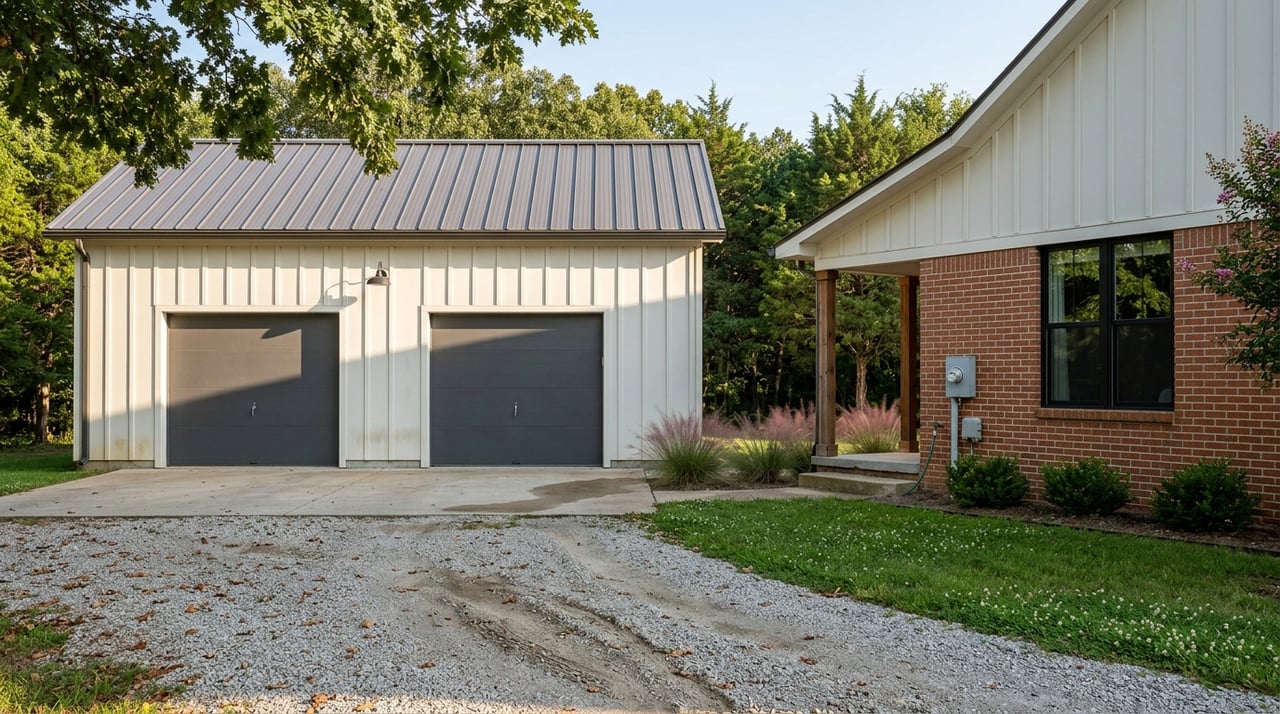
A barn, pole barn, detached garage, workshop, or shed can be a major reason you want a property in the first place. Still, those structures should be treated as real due diligence items, not side notes.
Fannie Mae says appraisers must photograph outbuildings and, when a structure is not part of an ADU, it should be treated as an ancillary outbuilding and valued separately based on contributory value. That guidance appears in the Fannie Mae appraisal policy, and it is one reason legal status and use matter for both financing and resale.
Agricultural use is not always the same
In Sumner County, barns, sheds, silos, and other structures used exclusively for agricultural purposes may be exempt from certain bulk and yard regulations under the county zoning resolution. The county also states that agricultural uses are exempt from building permits, though plumbed structures still need applicable septic permits.
Inside Portland city limits, the rules can be different. Portland also regulates domesticated fowl by lot size and prohibits roosters, according to the city’s domesticated fowl ordinance page. If your goal is a hobby-farm style setup, make sure the property’s location supports that use.
Look at Greenbelt before you buy
For some acreage buyers, Greenbelt status can be a plus because it may reduce carrying costs. But it should also be part of your long-term planning.
Sumner County explains that the Greenbelt law is intended to preserve farmland and open space. The county also notes that rollback taxes may apply if land loses eligibility due to subdivision, withdrawal, conversion, or changes in use or size. According to the county’s planning and zoning information, agricultural and forest properties have a 3-year rollback period, while open space has a 5-year rollback period.
Why Greenbelt affects your exit strategy
If you may divide the land later, stop agricultural use, or convert the property to another purpose, you will want to understand the tax impact ahead of time. What helps today may create a future cost if your plans change.
That does not mean Greenbelt is a problem. It simply means you should evaluate it as part of the full ownership picture, not just a line item on the tax record.
Financing acreage around Portland
Acreage properties can absolutely be financeable, but lenders and appraisers often look closely at documentation. Utilities, access, legal use, and marketability all matter.
Fannie Mae says utilities must meet community standards, and if public water or sewer are unavailable, private well and septic facilities must be available and usable. The guidance also says off-site private facilities require a legally binding access and maintenance agreement, and the site should have adequate vehicular access, as detailed in the Fannie Mae policy guide.
USDA may be relevant for some buyers
For eligible buyers looking at rural properties, USDA financing may also be worth discussing with a lender. The USDA Rural Development fact sheet states that eligible properties must be in a rural area and that there are no set acreage limits as long as the acreage is common for the area.
USDA also notes that eligible funds can include utility connection fees and site preparation costs. That does not mean every property or buyer will qualify, but it is a useful financing conversation to have early.
Questions to ask before you make an offer
The best acreage buyers slow down and answer the practical questions first. A little clarity up front can prevent big surprises later.
Here are some of the most useful questions to ask:
- Is the parcel inside Portland city limits or in unincorporated Sumner County?
- Is access public, private, shared, or tied to state highway frontage?
- Does the property use public water and sewer, or a private well and septic system?
- Are there floodplain, drainage, or land-disturbance concerns?
- Which outbuildings are legal, and how are they currently used?
- Is the land in Greenbelt, and could rollback taxes apply later?
- Does the parcel already have a 911 address and utility address assigned?
Build the right team early
Buying a lifestyle property usually works best when you involve the right professionals from the start. That may include your agent, a lender comfortable with acreage, a surveyor, a licensed septic installer or soil consultant, and the local planning or building office when permit questions come up.
This is where local guidance can make the process smoother. A people-first brokerage should help you ask better questions, spot red flags earlier, and move at a pace that protects your goals instead of pushing you into a rushed decision.
If you are considering acreage or a lifestyle property around Portland, Local Realty Partners, LLC is here to help you sort through the details with clear guidance and no pressure.
FAQs
What should you verify first when buying acreage around Portland, TN?
- Start by confirming whether the property is inside Portland city limits or in unincorporated Sumner County, because that affects zoning, permits, and how the land and outbuildings may be regulated.
How does road access affect acreage property financing in Sumner County?
- Road access matters because lender and appraisal standards may require clear, documented primary access, and private or shared roads may need legally enforceable maintenance agreements.
What should you know about wells and septic systems on Portland-area acreage?
- You should confirm whether the property uses private well and septic service, review available records, and understand that private well water testing and septic permitting are separate due diligence steps.
Can outbuildings change the value of a lifestyle property near Portland?
- Yes, barns, workshops, sheds, and similar structures can affect appraisal and resale, especially when their legal status, use, and contributory value are reviewed.
Why does Greenbelt status matter when buying land in Sumner County?
- Greenbelt may reduce carrying costs, but if the property later loses eligibility because of subdivision, withdrawal, or change in use, rollback taxes may apply.
Is USDA financing possible for rural properties around Portland, Tennessee?
- It can be, because USDA states there are no set acreage limits as long as the acreage is common for the area and the property is in an eligible rural location.